How to Clean a Baseball Hat Without Ruining It

Most caps get ruined in the wash, not on your head. People toss a good hat in the machine or the dryer, and the heat and the agitation warp the shape, fade the color, and undo the finishing. A well-made hat asks for a gentler hand than that, and the good news is that caring for one is simple once you know the system.
This is how I clean and care for my own Vandre hats, whatever the fabric. It works for linen, wool, and cotton, because the principles are the same across all of them. I will cover the everyday fix for a spot or a stain, the deeper clean for when the whole hat needs it, and the few differences that matter fabric by fabric. Follow this and a good hat will look right for years.
A quick word on the three fabrics
Vandre is organized by fabric, and each one is chosen with a season in mind, so caring for a hat starts with knowing what it is made of.
Linen is the warm-weather cloth. Woven from flax, it is one of the oldest and most breathable fabrics there is, and ours is 100% Irish linen from Baird McNutt, a mill with more than 220 years of heritage. It is that rare fabric that improves with age, softening with every wear while staying strong, which is exactly why it suits a cap you reach for all summer, year after year.
Wool is the cool-weather cloth. The backbone of fine tailoring for centuries, wool regulates temperature, resists wrinkles and odor, and springs back into shape, so a wool flannel cap holds a refined form and shrugs off light rain. It is built to last through many cold seasons.
Cotton is the year-round do-it-all. The most-worn fiber in the world, soft and breathable and endlessly easy, it is comfortable from the first wear and sturdy enough to take daily use while only getting softer. It is the everyday hat, raised to a standard worth keeping.
Different fabrics, one standard, and one gentle approach to caring for all of them. Here it is.
The golden rules for every hat
Before any specifics, these apply to every Vandre hat, every time:
- Cool water only. Never warm or hot. Heat is what shrinks, stiffens, and sets stains.
- Hand clean, never the machine. No washing machine, no dryer. Both are too harsh for the fabric and the hat's shape.
- Blot and press, never scrub. Rubbing frays fibers and spreads a stain. Gentle pressure lifts it.
- Never wring or twist. Wringing sets hard creases and distorts the crown. Let the excess water run off on its own instead.
- Reshape while damp, then air dry away from heat. Shape the crown and brim by hand, then let it dry on its own. No radiators, no direct sun, no dryer.
- Use only a little gentle detergent, the kind made for delicates. Skip bleach and harsh stain removers entirely.
Keep those in mind and the rest is just detail.
Spot cleaning a stain: the everyday fix
Nine times out of ten you do not need to wash the whole hat. A spot clean handles most marks, and it is the least stressful thing you can do to the fabric. Here is the system.
1. Deal with it sooner rather than later. A fresh mark lifts far more easily than one that has dried and set. If you catch a spill, blot the excess right away with a dry cloth before it soaks in.
2. Mix a cool cleaning solution. A small basin of cool water with a few drops of gentle, delicate-safe detergent is all you want. Keep it weak. You can always go again.
3. Use a soft, clean white cloth. White matters, because a colored cloth can transfer its own dye onto a damp hat. Dampen the cloth in the solution and wring the cloth out, not the hat, so it is damp and not dripping.
4. Blot from the outside of the stain inward. Work the edges first and move toward the center. This keeps the stain from spreading outward and is what prevents a ring from forming around it.
5. Press and lift, in small dabs. Press the cloth onto the mark, hold for a second, and lift. Repeat. Do not rub or scrub. Let the solution and the pressure do the work, and re-dampen the cloth as it picks up the stain.
6. Rinse the spot. Dampen a second clean cloth with plain cool water and blot the area again to lift any leftover detergent, so it does not dry into a faint outline.
7. Reshape and air dry. Smooth the fabric, shape the crown and brim, and let that area air dry away from heat. That is usually the whole job.
For a set-in stain or an all-over refresh: the gentle soak
When a mark will not lift, or the whole hat just needs freshening, move to a gentle hand wash. This is the same method as the full linen wash, and it is safe across the fabrics.
1. Fill a basin with cool water and add a small amount of gentle detergent. Cool protects the color and the shape.
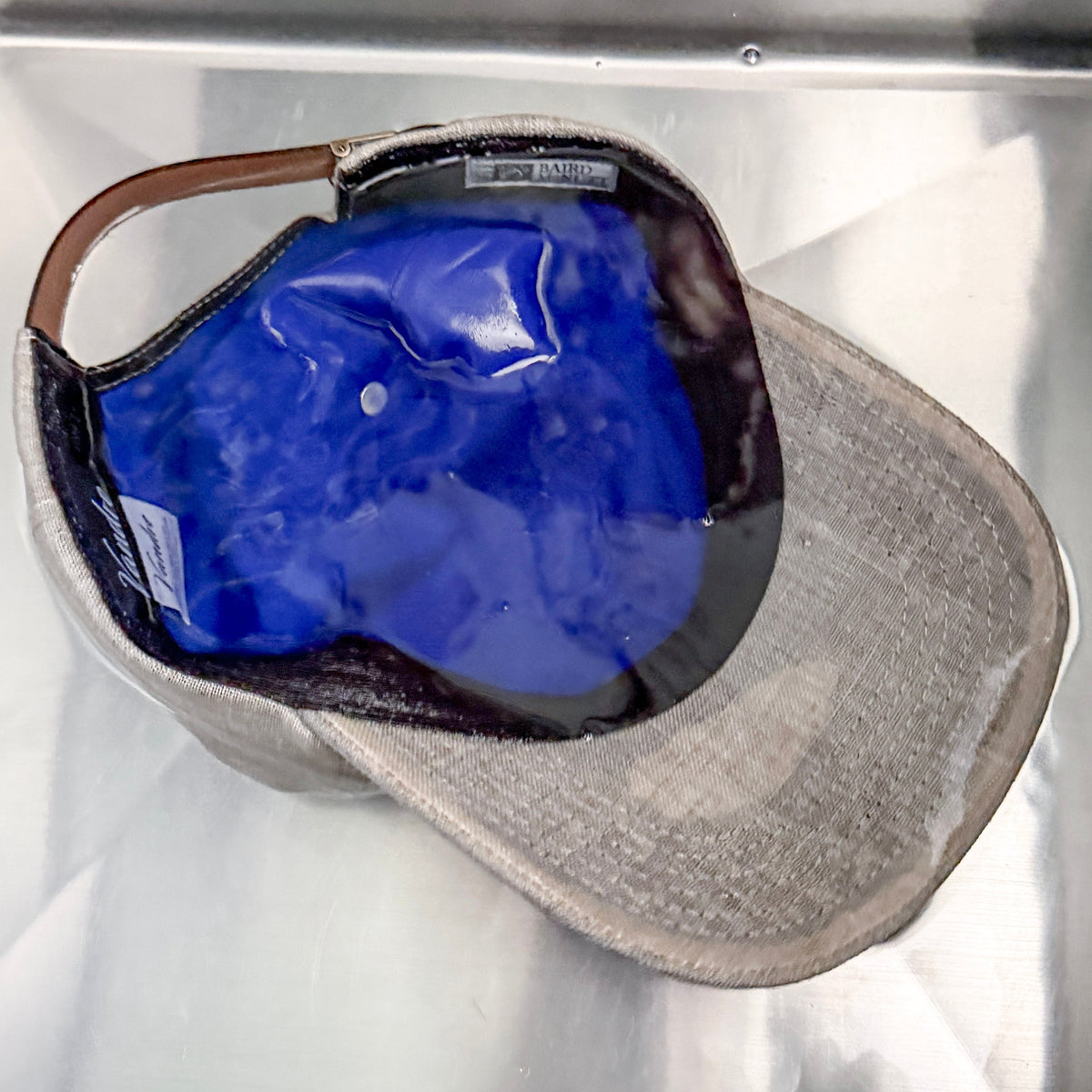
2. Submerge the hat and move it gently. Swish it slowly through the water, turn it over, and press the water through the fabric with your palms. Do not scrub, wring, or twist. The idea is to move the water through the hat, not to work the hat hard.
3. Give it time to soak. A few minutes is enough for a general refresh. For a stubborn, set-in spot, let it sit up to about ten minutes, and gently work just that area between your fingers, pressing and releasing rather than rubbing. Patience lifts more than force does.
4. Rinse until the water runs clear. Swish it through clean cool water once or twice until there is no detergent left.
5. Lift the hat out and let the excess water run off. Hold it over the basin for a moment and let the water fall away on its own. No wringing, no pressing, no squeezing.
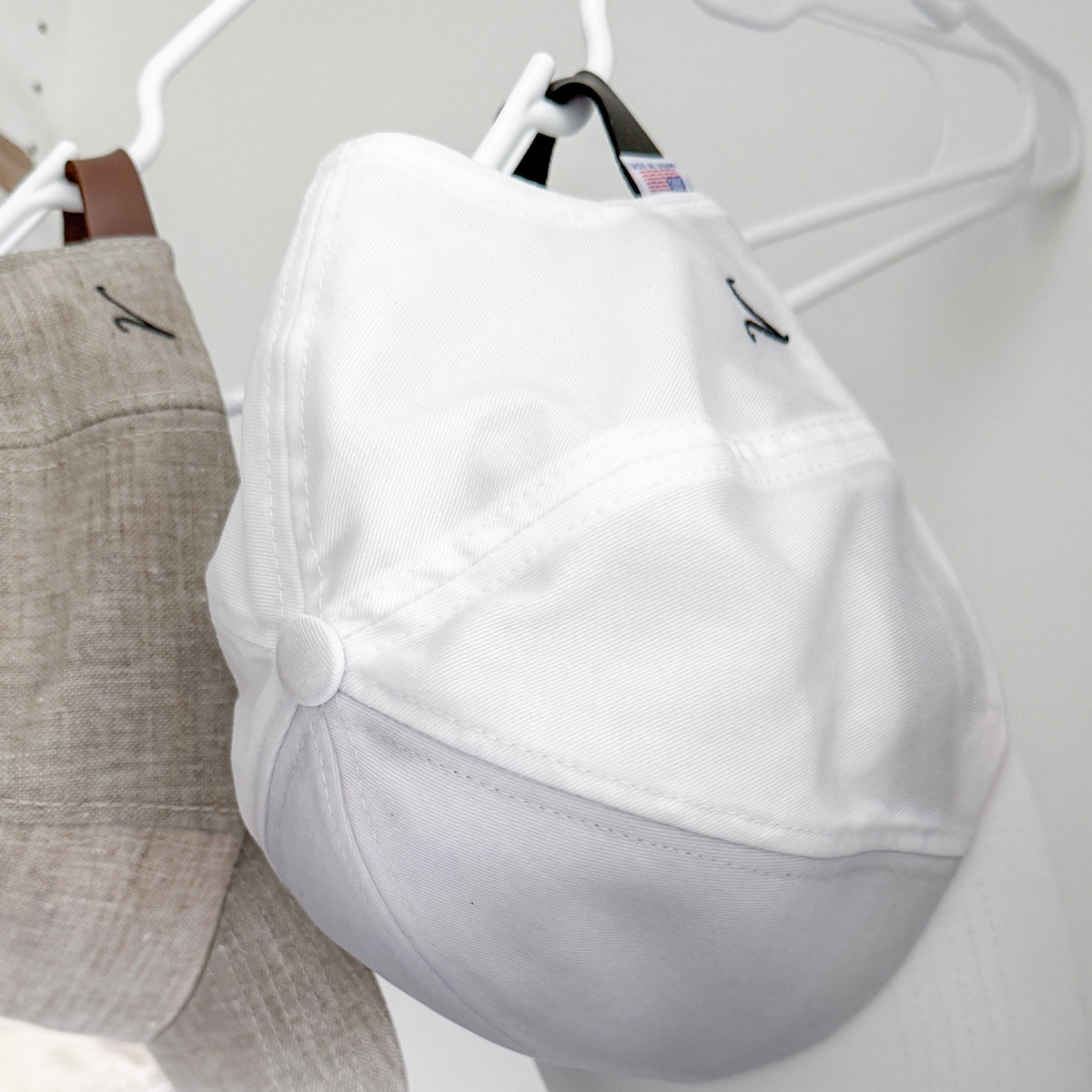
6. Reshape and hang to dry. Shape the crown and brim with your hands just to get its natural shape back, then hang the hat from the leather strap or the brim to air dry, usually overnight. Keep it away from direct heat and sun.
The differences that matter, fabric by fabric
The system above works for all three fabrics. These are the small, fabric-specific things worth knowing.

Linen. Linen loves this gentle treatment and only gets better with age. Expect some soft creasing, and know that it is part of the character rather than a problem. To relax wrinkles, lightly mist the hat with water, smooth it by hand, and let it air dry. Do not press it with a hot iron, since the brim and construction are not built for it. Linen has its own full guide, with the break-in and wrinkle detail spelled out: How to Care for an Irish Linen Baseball Hat.
Wool. Wool is naturally resilient and tends to shed dirt and odor on its own, so it needs washing less often than you would think. A good airing out between wears goes a long way. When it does need cleaning, be especially gentle: cool water, minimal movement, and no rubbing, because heat and hard agitation together are what can make wool felt. It can get wet, so do not panic about rain. Just let the excess water run off on its own, never wring it, and hang it to dry. Wool also has a short break-in, and it can be shaped and worn tighter as it settles in. Wool has its own full guide too: How to Care for a Wool Baseball Hat.
Cotton. Cotton is the most easygoing of the three and takes a gentle hand wash comfortably. Cool water, a little gentle detergent, blot any marks, then reshape and air dry. It is sturdy, but it still does not belong in the machine or the dryer, both because the shape matters and because the leather strap does not take heat well. For the deeper version, see How to Care for a Cotton Baseball Hat.
Sweat and salt on the sweatband
The most common thing a hat needs is not a dramatic stain, it is the sweat and salt line that builds along the inside band over time. Treat it the same gentle way. Dampen a soft cloth in the cool solution and blot along the band, or let just the band area soak a little longer in the basin, then rinse, let the excess water run off, and air dry. Go easy and repeat if needed rather than scrubbing hard. Skip the bleach, which is harsh on the fabric and can leave its own mark.
Caring for the leather strap
Every Vandre hat has a leather strap, and leather and long soaks are not friends. When you can, keep the strap out of a long soak. For the strap itself, a wipe with a damp cloth is usually all it needs, and if it does get wet, let it dry naturally, away from heat, so it stays supple.
What never to do
A short list of the things that actually ruin a hat:
- Do not machine wash or tumble dry, ever.
- Do not use warm or hot water.
- Do not wring or twist the hat.
- Do not scrub hard or use a stiff brush on the fabric.
- Do not use bleach or harsh solvent stain removers.
- Do not iron directly with high heat. Mist and reshape instead.
- Do not dry it on a radiator, in a hot car, or in direct sun.
- Do not store it crushed.
Storing your hat
Store a hat so it holds its shape, not crushed in a drawer or at the bottom of a bag. The storage bag it comes with is made for exactly this, keeping it clean and protected between wears and while you travel. In the off-season, keep it somewhere cool and dry and out of direct sunlight.
The payoff
A hat you care for properly is one of the few things that improves with age. The fabric softens, the fit becomes yours, and the color and shape hold long after a machine-washed cap would have given up. Treat it gently, clean it by hand, and let it age. That is the whole secret.
You can see the current lineup across every fabric in Shop All.
Timeless Headwear. Designed with Intention.
Ben / Dapper Professional
Frequently asked questions
How do you clean a baseball hat without ruining it?
Clean it by hand in cool water with a little gentle detergent. Spot clean marks by blotting from the outside in with a soft white cloth, or hand wash the whole hat with a gentle soak. Never use the machine, the dryer, hot water, or wringing. Reshape and air dry away from heat.
Can you put a baseball hat in the washing machine?
No. The machine and dryer are too harsh for the fabric and the shape, and the heat and agitation warp the crown and brim and are hard on the leather strap. Hand cleaning in cool water is the safe way.
How do you get a stain out of a hat without leaving a ring?
Blot from the outside edge of the stain inward, not from the center out, and press rather than rub. Then blot the area with a second cloth dampened in plain cool water to lift the leftover detergent so it does not dry into an outline.
How do you get sweat stains out of a hat?
Blot the inside band with cool water and a little gentle detergent, or let just the band area soak a bit longer, then rinse, let the excess water run off, and air dry. Go gently and repeat rather than scrubbing, and avoid bleach.
How long should I soak a hat?
A few minutes is enough for a general refresh. For a stubborn, set-in stain, up to about ten minutes, gently working just that area between your fingers. Longer is not better, patience and gentle pressure lift more than force.
How do you dry a hat after washing?
Lift it out of the water, let the excess run off on its own, then reshape the crown and brim by hand and hang it from the strap or brim to air dry, usually overnight. Do not wring or squeeze it. Keep it away from direct heat, radiators, and sun, and never use the dryer.
Can you wash a wool or cotton hat the same way?
Yes. The gentle cool-water method works for linen, wool, and cotton. Wool needs the lightest touch and the least movement, cotton is the most forgiving, and all three should be air dried and kept out of the machine.